Category: Electrical Engineering

Thermocouple Reading Falls When Heated? Check Polarity End to End
A reading moving in the wrong direction during a controlled temperature change suggests a polarity or configuration problem.
Read More
Three-Wire RTD Still Reads High? Check Lead Resistance Balance
Three-wire RTD measurement reduces lead effects under the assumptions of the input circuit.
Read More
One Analog Channel Disturbs Another? Check Shared Limits
A channel fault can affect neighboring measurements when the input hardware shares circuitry or operating limits.
Read More
PNP vs NPN Sensors: The Common-Terminal Mistake That Stops PLC Inputs
A sensor can have power and still be incompatible with the PLC input circuit.
Read More
0–10 V Reads Correctly at the Sensor but Wrong at the PLC: Check the Reference
A voltage measurement is always between two points.
Read More
24 V Supply Reads Fine Until the Machine Moves? Check Voltage Under Load
A 24 V reading with the machine idle does not prove the control supply remains adequate when loads switch.
Read More
Relay Output vs Transistor Output: The Replacement That Isn\’t Plug-and-Play
Two PLC output modules can have similar channel counts while requiring different wiring and load arrangements.
Read More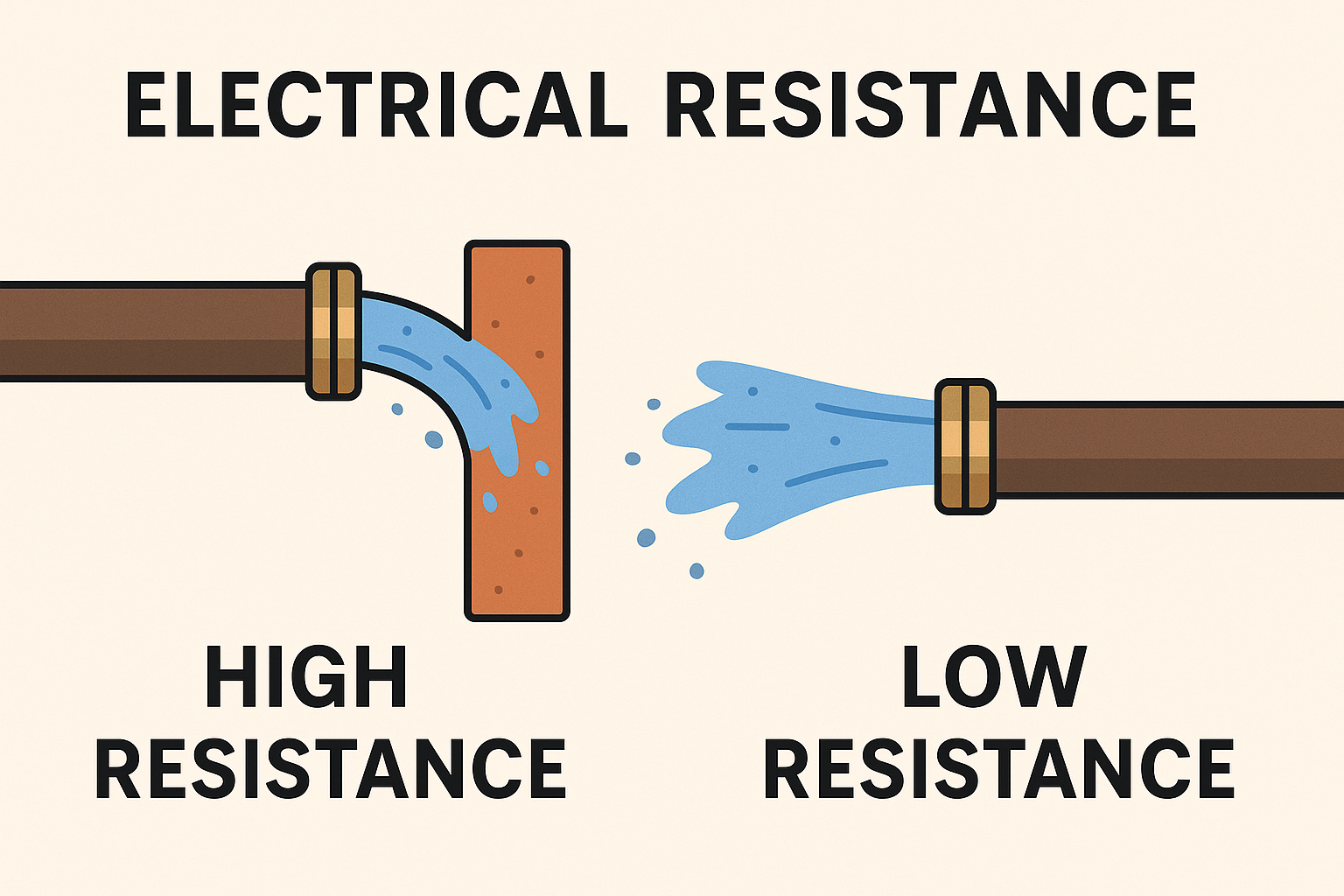
What Is Electrical Resistance? Simple Explanation for Beginners (Water Hose Analogy)
What Is Electrical Resistance? Simple Explanation for Beginners Electrical resistance is one of the three core concepts in electronics.If voltage is the push and current is the flow, then resistance is what slows the electrons down. In this beginner-friendly guide, we’ll use simple analogies to explain exactly what resistance is and why it matters in…
Read More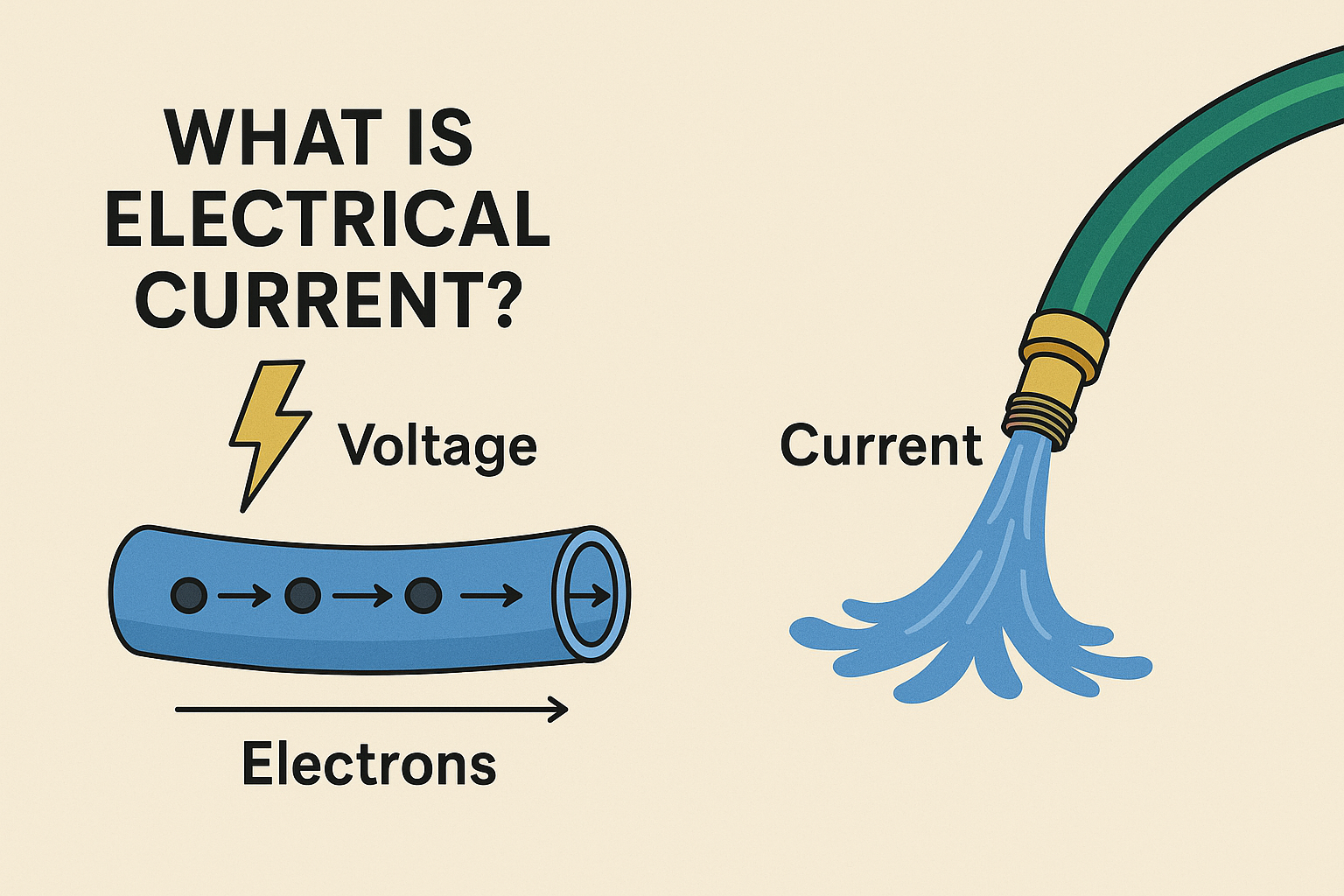
What Is Electrical Current? Simple Explanation for Beginners (Water Hose Analogy)
What Is Electrical Current? Simple Explanation for Beginners If you’ve already learned that voltage is the push, then electrical current is the actual flow of electrons moving through a wire.This beginner-friendly guide uses simple analogies so anyone — even a 15-year-old — can understand it clearly. Electrical Current Explained in the Easiest Way Let’s return…
Read More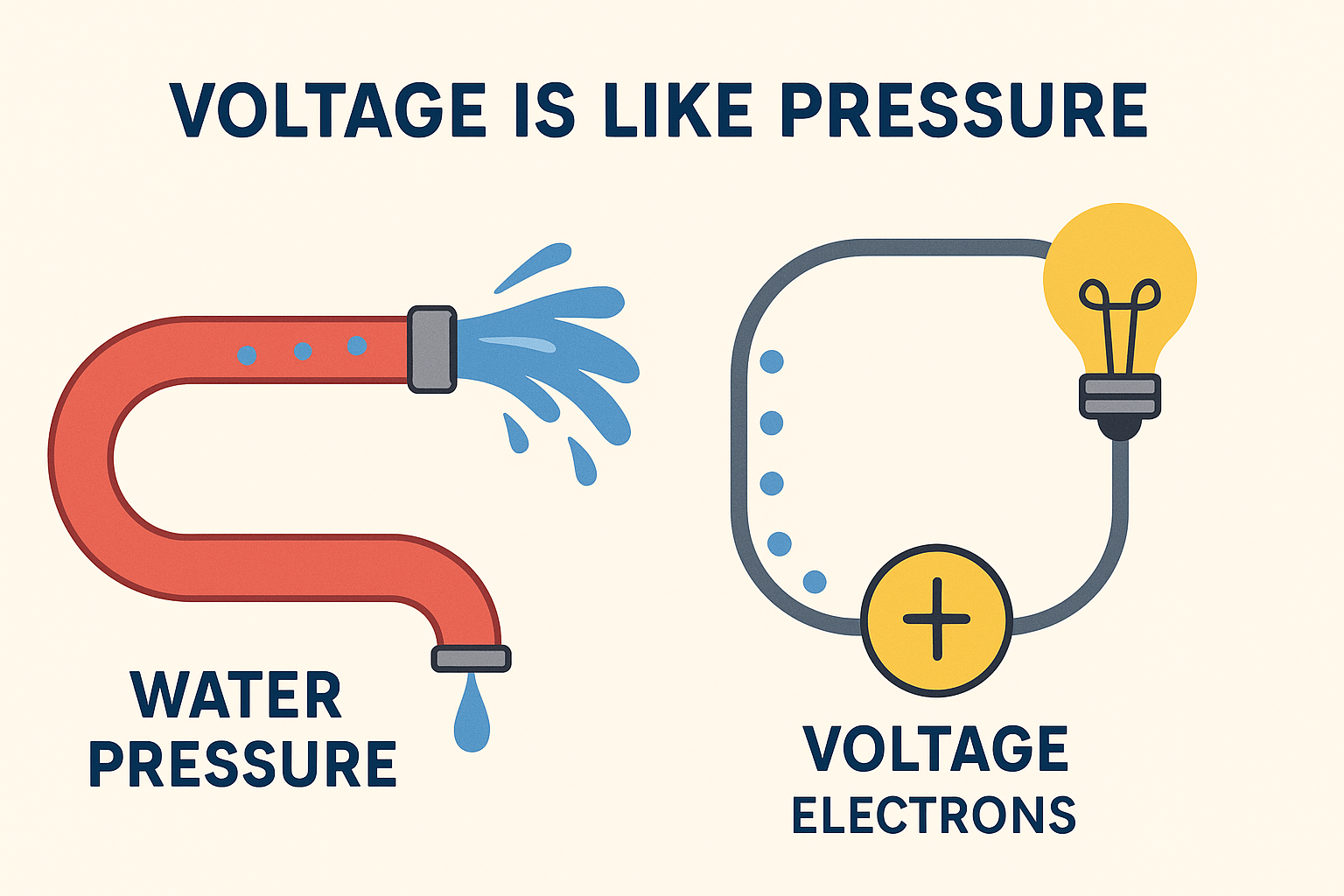
What Is Voltage? Simple Explanation for Beginners (Water Pressure Analogy)
What Is Voltage? The Easiest Explanation for Beginners If you’ve ever wondered what voltage actually is, here’s the simplest way to understand it — no engineering degree required. Voltage is like pressure that pushes electrons through a wire.Just like water pressure pushes water through a hose, voltage pushes electrons through a circuit. More pressure? More…
Read More