Tag: PLC Basics
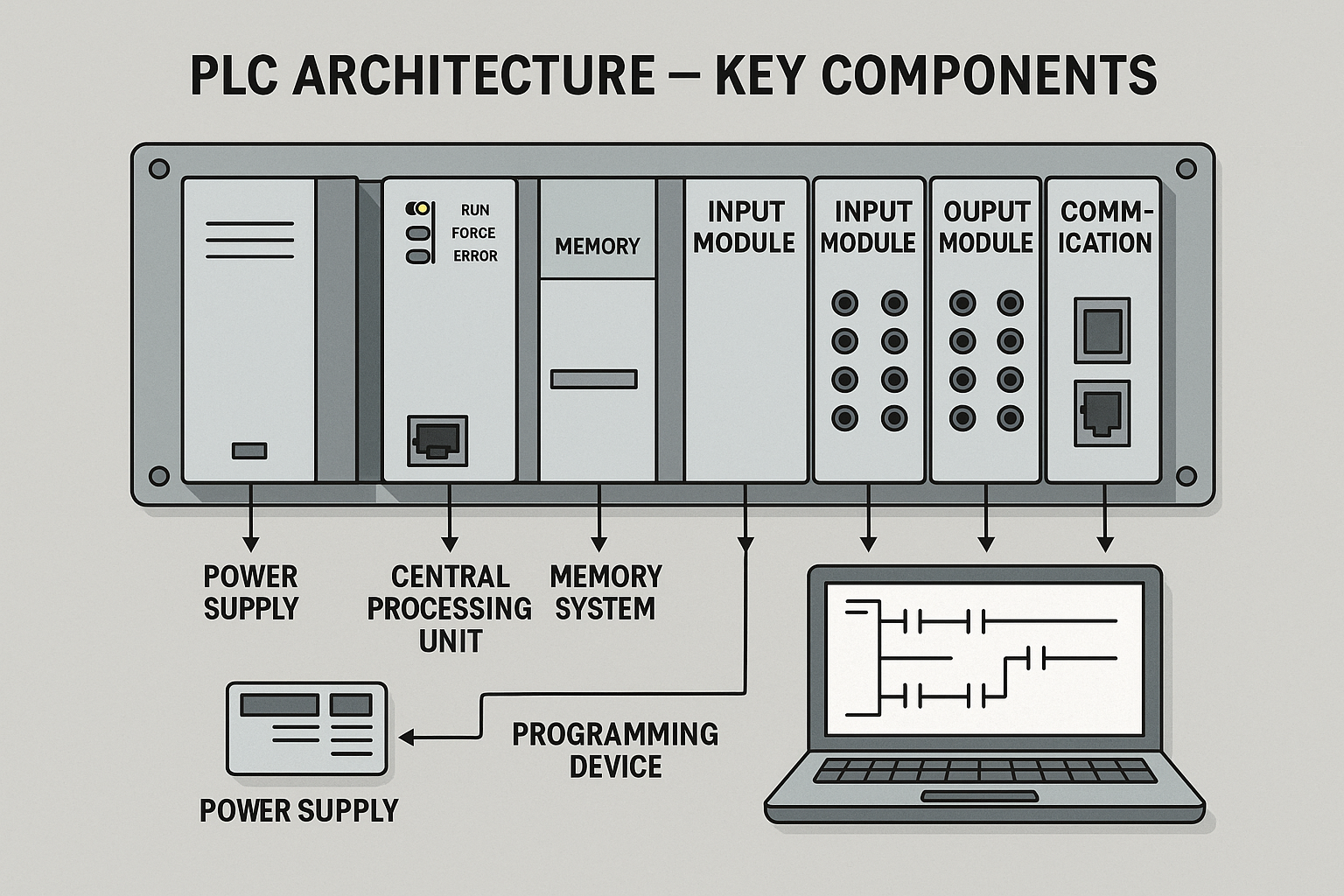
PLC Architecture: Key Components Explained (Beginner-Friendly Guide)
Programmable Logic Controllers (PLCs) are the central building blocks of industrial automation. Their architecture is designed to be rugged, reliable, and modular, allowing them to control everything from simple machines to complex manufacturing lines. Understanding PLC architecture is essential for engineers, technicians, and anyone working with automation systems. In this post, we break down the…
Read More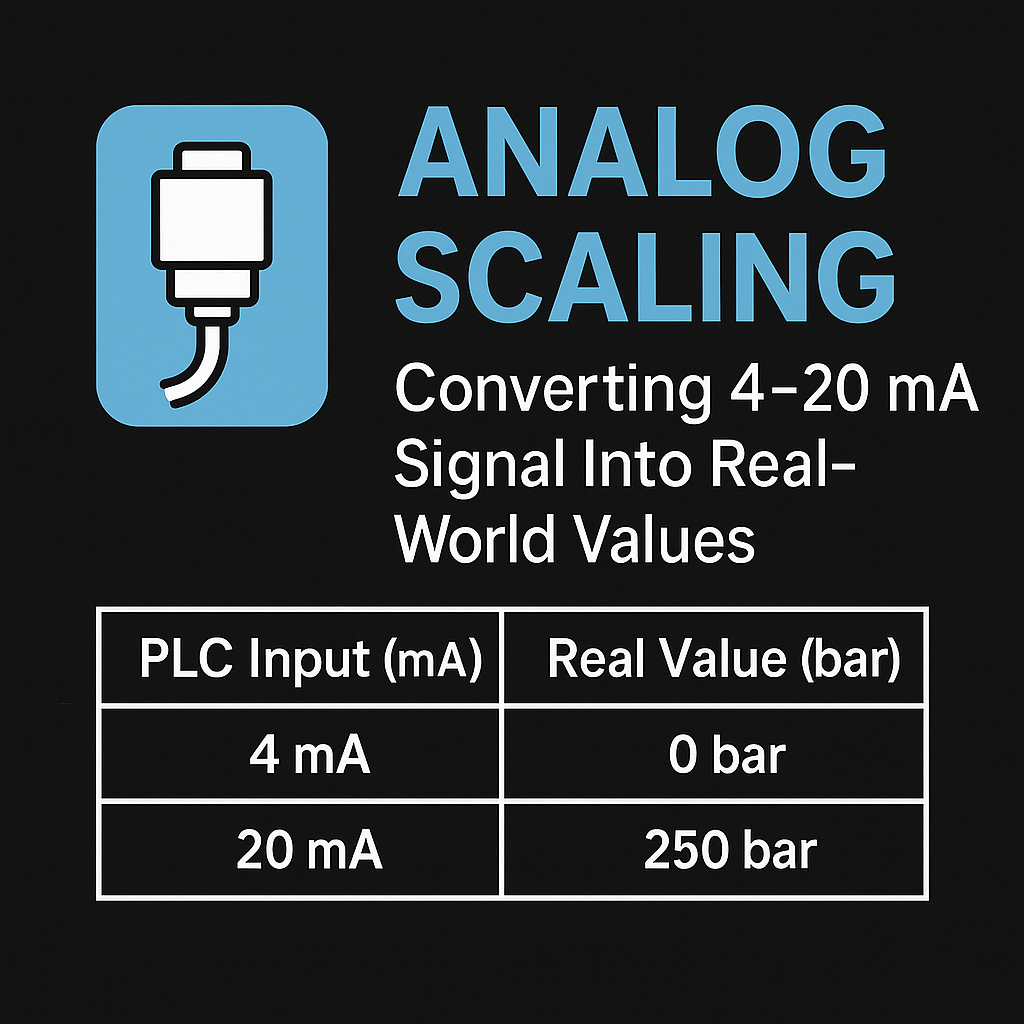
Analog Scaling: Converting 4–20 mA Signals Into Real-World Values
Many industrial sensors output a 4–20 mA signal, but your PLC can’t use that directly — it needs to convert the raw current into real-world units like °C, bar, or millimeters.This conversion process is called analog scaling, and getting it right is essential for accurate alarms, trends, and control logic. How Analog Scaling Works A…
Read More