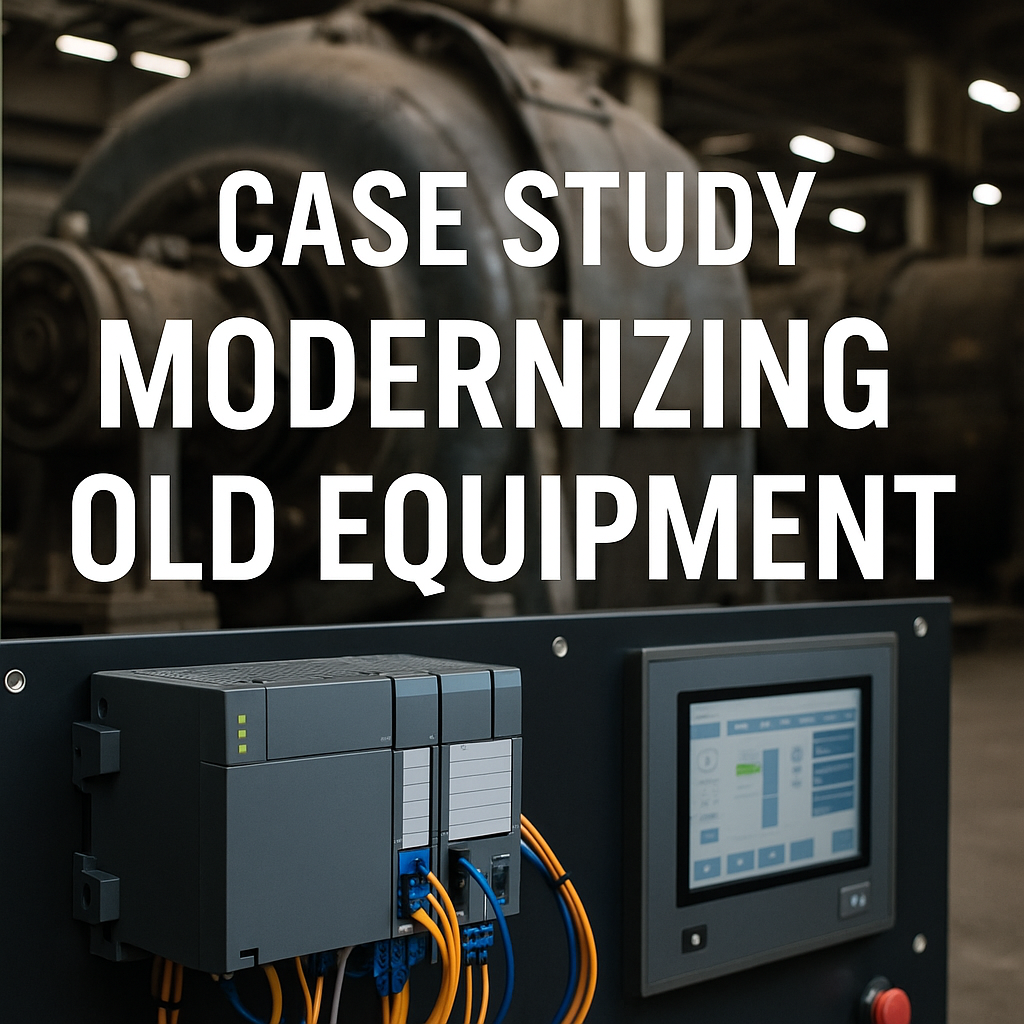
How Modernizing Old Equipment Improved Productivity: Industrial Case Study
Modernizing old industrial equipment is one of the most cost-effective ways to increase productivity without replacing entire machines. In this case study, we break down how a manufacturing plant transformed outdated systems into a modern, efficient, and maintainable production line—without the high cost of full equipment replacement.
Background
A mid-sized manufacturing facility was running several 20-year-old machines built with legacy PLCs, worn-out operator panels, and obsolete communication interfaces.
The problems were becoming critical:
- Frequent unplanned downtime
- No available spare parts
- Difficult troubleshooting due to outdated software
- Limited production data for monitoring
- Safety systems not up to current standards
Management faced a decision: replace the machines (high cost, long lead time) or modernize the existing ones.
They chose modernization.
Project Goals
The engineering team established four key objectives:
- Increase system reliability
- Reduce downtime and maintenance complexity
- Improve data availability for operators and management
- Extend machine lifespan without full replacement
Modernization Strategy
The solution focused on upgrading critical components while keeping the machine’s mechanical system intact.
1. PLC Upgrade to a Modern Platform
The old PLC was replaced with a new, widely supported model offering:
- Faster scan times
- Integrated diagnostics
- Ethernet-based communication
- Easy programming with today’s tools
The upgrade improved reliability and enabled remote monitoring.
2. New HMI With Intuitive Controls
The outdated monochrome panel was replaced by a modern touchscreen HMI.
New features included:
- Real-time alarms
- Interactive machine visualization
- Parameter adjustments
- Trend graphs
- Recipe management
Operators could troubleshoot problems instantly—no more decoding cryptic messages.
3. Migration From Serial to Ethernet Protocols
The original communication relied on RS-232/RS-485.
The modernization introduced:
- EtherNet/IP / PROFINET / Modbus TCP (depending on equipment)
- Clear device addressing
- Faster throughput
- Better support for SCADA and MES integration
Data became accessible across the plant network and IIoT-ready.
4. Electrical Panel Refresh
A partial redesign of the electrical panel improved long-term maintainability:
- New wiring and labeling
- Updated safety relays
- Surge protection
- Standardized terminals and fuses
This reduced troubleshooting time and improved safety compliance.
5. Added Remote Diagnostics & Data Logging
To support predictive maintenance, the team integrated:
- Vibration and temperature sensors
- Data logging to a local historian or cloud platform
- Remote access for engineers
- Alarm notifications to maintenance staff
This allowed problems to be detected before causing downtime.
Results
After modernization, the factory achieved impressive outcomes.
✓ 60% Reduction in Downtime
New controls and diagnostics enabled faster fault detection.
✓ 30% Increase in Productivity
Improved cycle reliability and reduced stoppages boosted output.
✓ Spare Parts Readily Available
Modern hardware eliminated the problem of obsolete components.
✓ Machine Lifespan Extended 10+ Years
With updated controls and safety systems, the equipment now meets current standards.
✓ Better Operator Experience
Clear alarms and touchscreen controls reduced training time.
Cost Comparison: Modernization vs Replacement
| Option | Cost | Time to Implement | Impact |
|---|---|---|---|
| Full Machine Replacement | Very high | 6–12 months | Major downtime |
| Modernization (Controls Upgrade) | 20–30% of replacement cost | 2–6 weeks | Minimal downtime |
Modernization delivered major benefits at a fraction of the cost.
Key Takeaways
Modernizing old equipment is a powerful strategy when:
- Mechanical components are still functional
- Replacement machines are expensive or unavailable
- Downtime must be minimized
- Better data, diagnostics, or safety is needed
With the right engineering approach, older machines can achieve performance close to new systems.