Category: Electrical Engineering
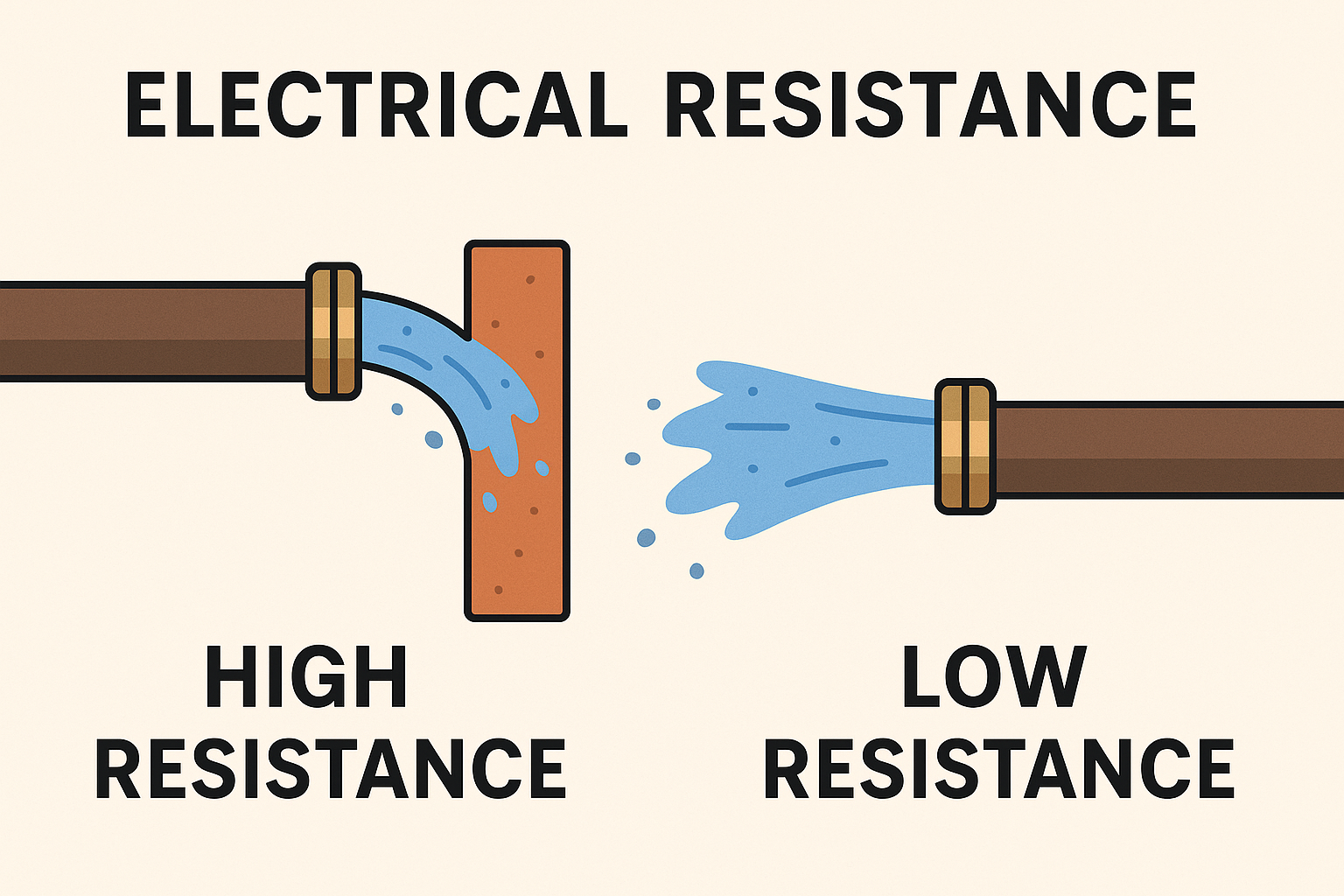
What Is Electrical Resistance? Simple Explanation for Beginners (Water Hose Analogy)
What Is Electrical Resistance? Simple Explanation for Beginners Electrical resistance is one of the three core concepts in electronics.If voltage is the push and current is the flow, then resistance is what slows the electrons down. In this beginner-friendly guide, we’ll use simple analogies to explain exactly what resistance is and why it matters in…
Read More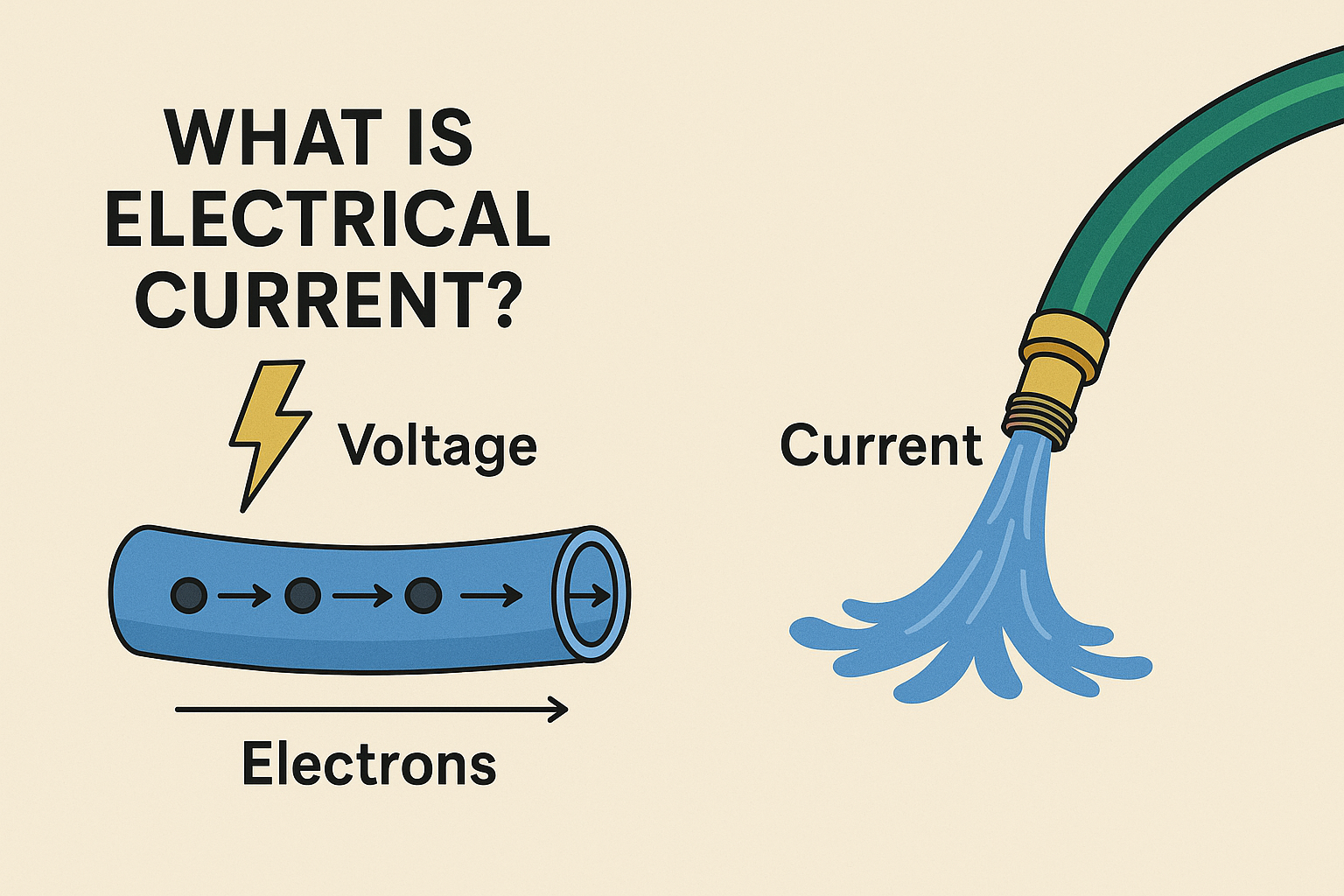
What Is Electrical Current? Simple Explanation for Beginners (Water Hose Analogy)
What Is Electrical Current? Simple Explanation for Beginners If you’ve already learned that voltage is the push, then electrical current is the actual flow of electrons moving through a wire.This beginner-friendly guide uses simple analogies so anyone — even a 15-year-old — can understand it clearly. Electrical Current Explained in the Easiest Way Let’s return…
Read More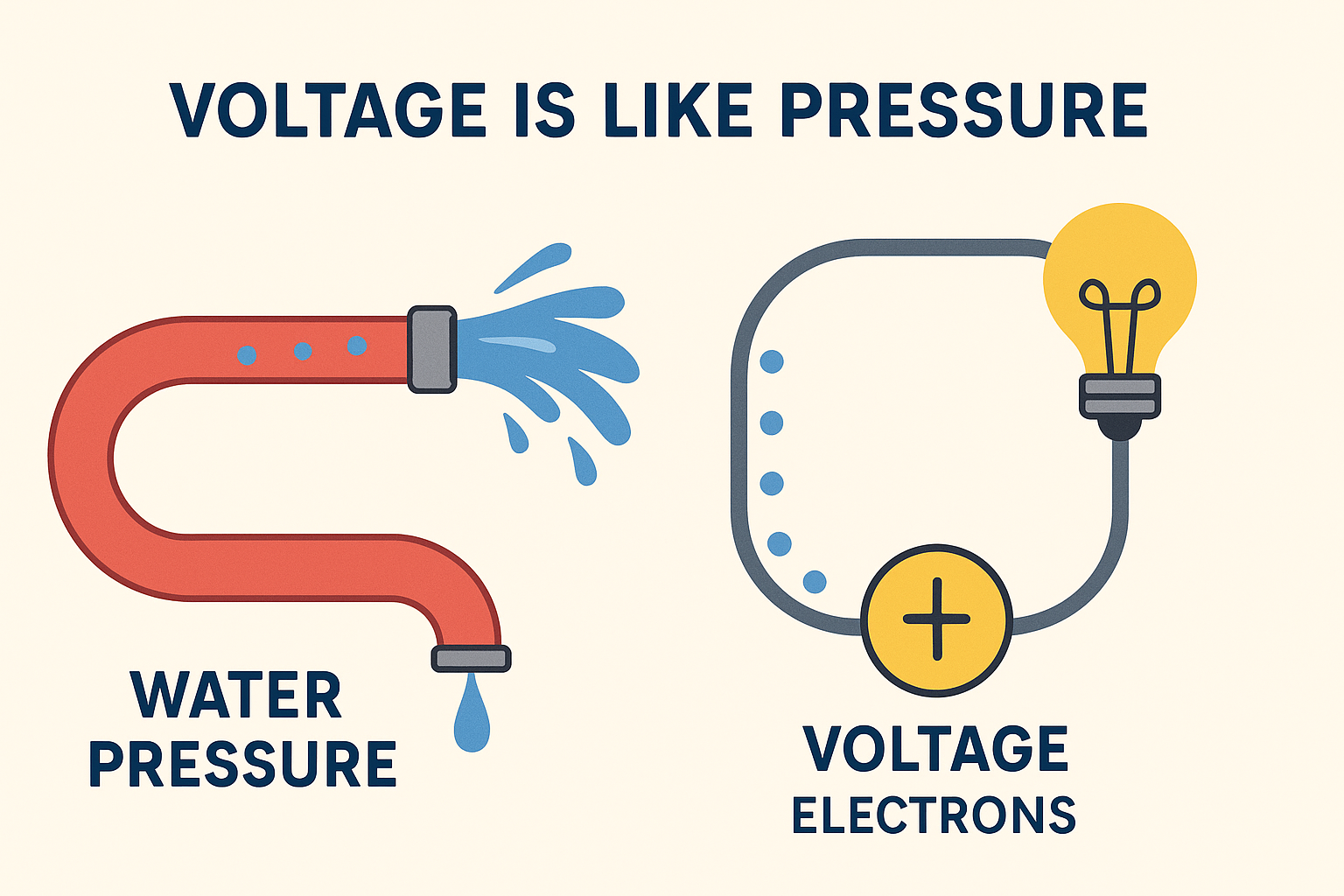
What Is Voltage? Simple Explanation for Beginners (Water Pressure Analogy)
What Is Voltage? The Easiest Explanation for Beginners If you’ve ever wondered what voltage actually is, here’s the simplest way to understand it — no engineering degree required. Voltage is like pressure that pushes electrons through a wire.Just like water pressure pushes water through a hose, voltage pushes electrons through a circuit. More pressure? More…
Read More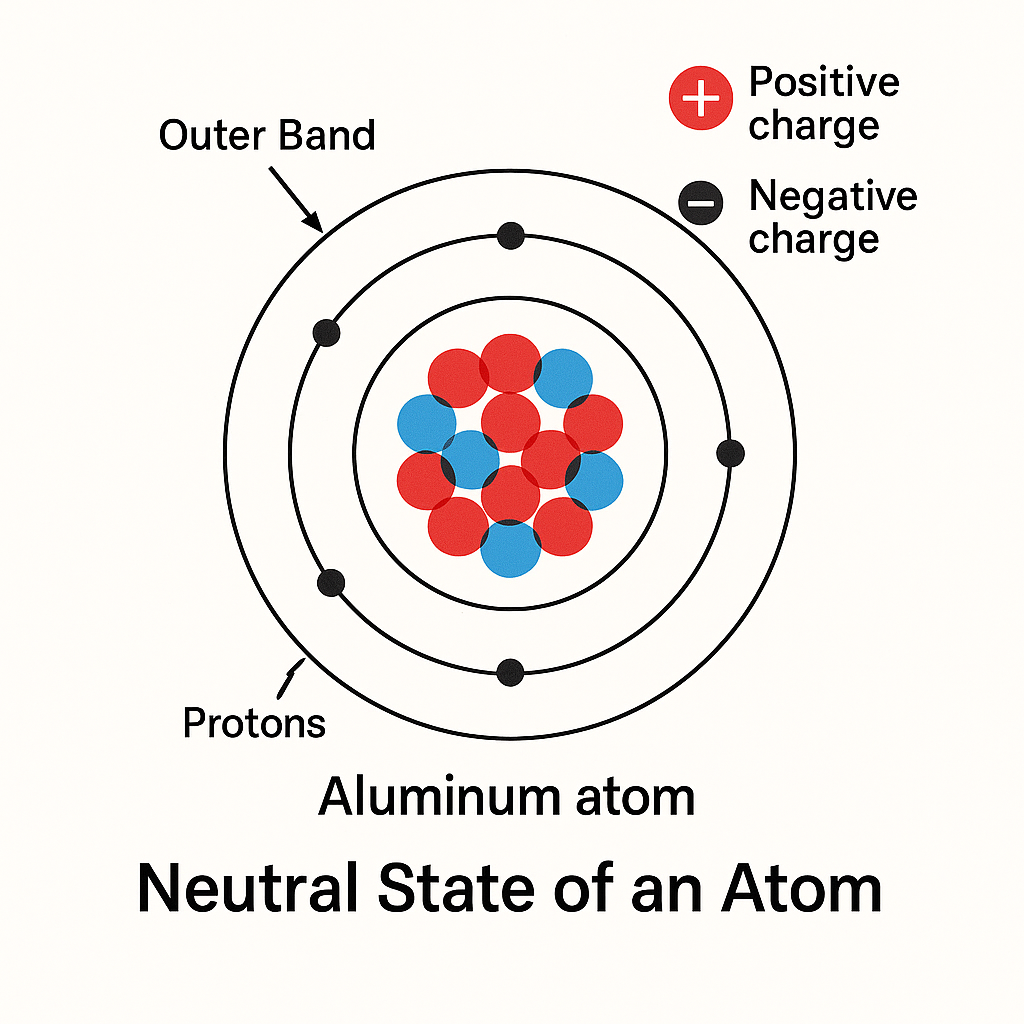
Electric Charges Explained: Neutral Atoms, Attraction, Repulsion, and Coulomb’s Law
Electricity begins at the atomic level. To understand how electric charge works, we must look at the structure of atoms and how electrons and protons create positive, negative, or neutral states. Neutral State of an Atom Atoms are identified by the number of electrons orbiting the nucleus and the number of protons inside the nucleus.…
Read More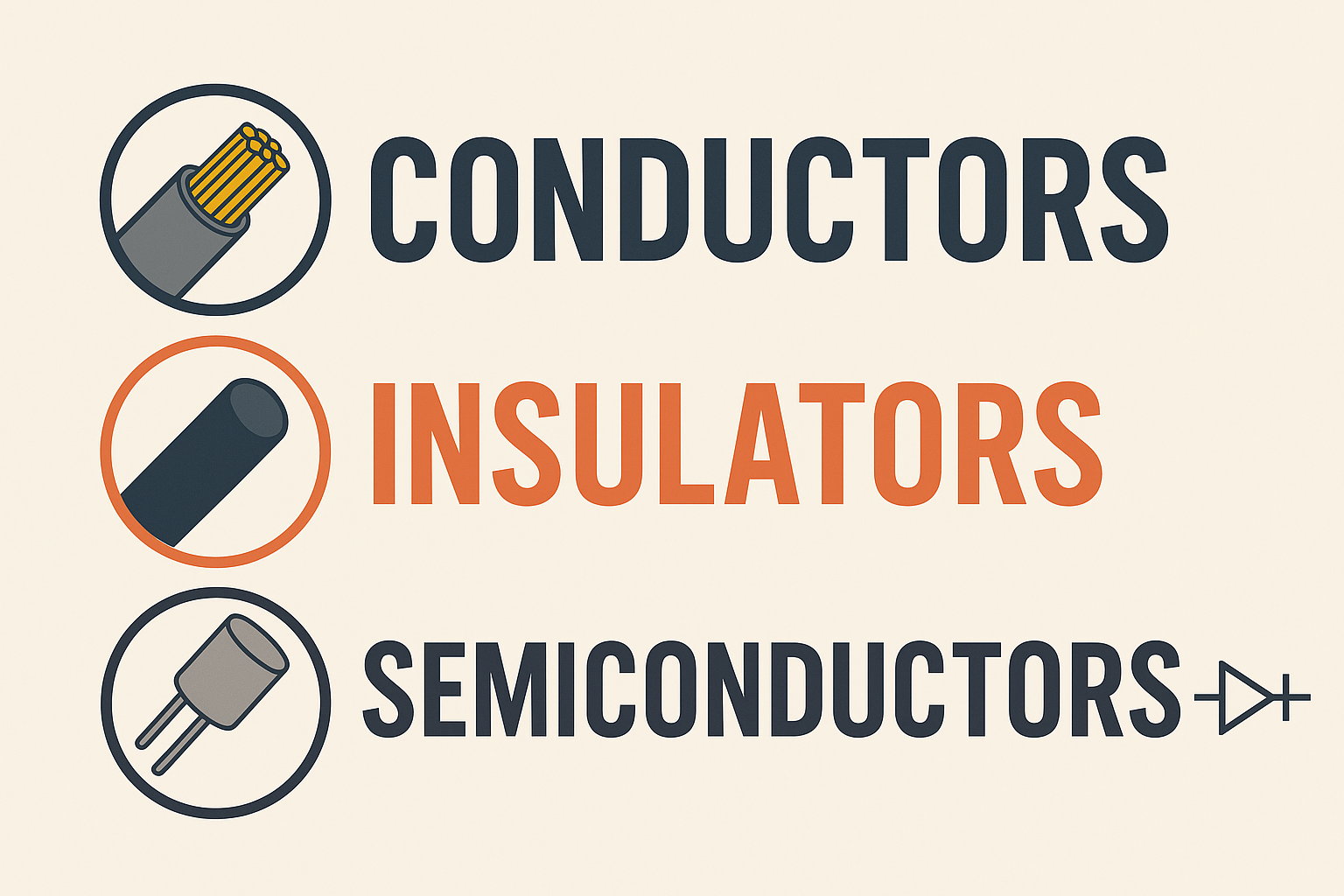
Conductors, Insulators, and Semiconductors: Electrical Basics Explained
Understanding how electricity moves through different materials is essential for anyone studying electronics or electrical systems. In this post, we’ll break down three major categories of materials: conductors, insulators, and semiconductors. Each plays a unique role in the world of electricity and modern technology. What Are Conductors? An electric current is created when free electrons…
Read More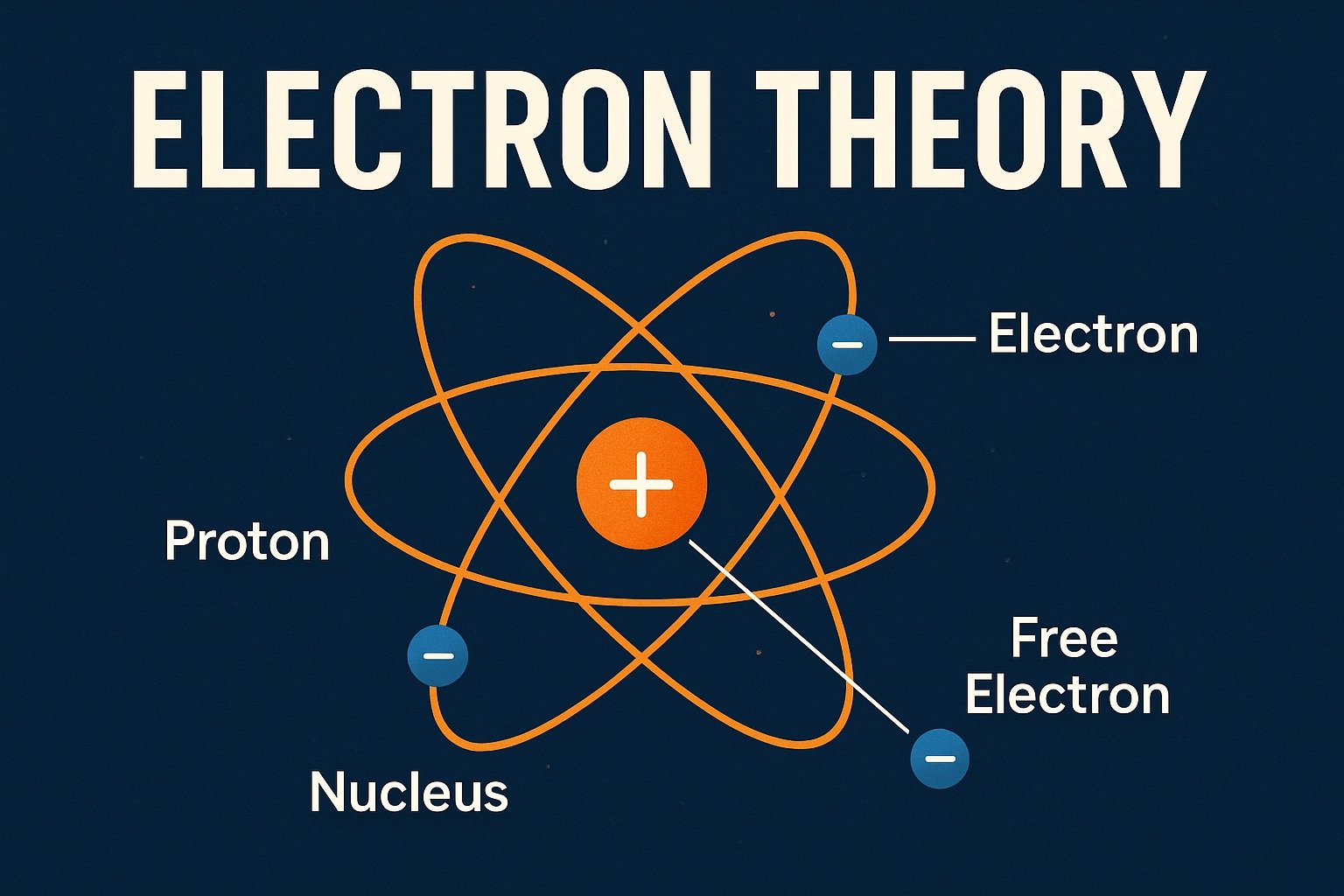
Understanding Electron Theory: How Atoms Create Electricity
Electricity is something we use every day—when we turn on a light, charge a phone, or power a machine. But what is electricity at the most fundamental level? To answer that, we need to start with the smallest building blocks of matter: atoms. In this article, we’ll explore electron theory, how electrons move, and how…
Read More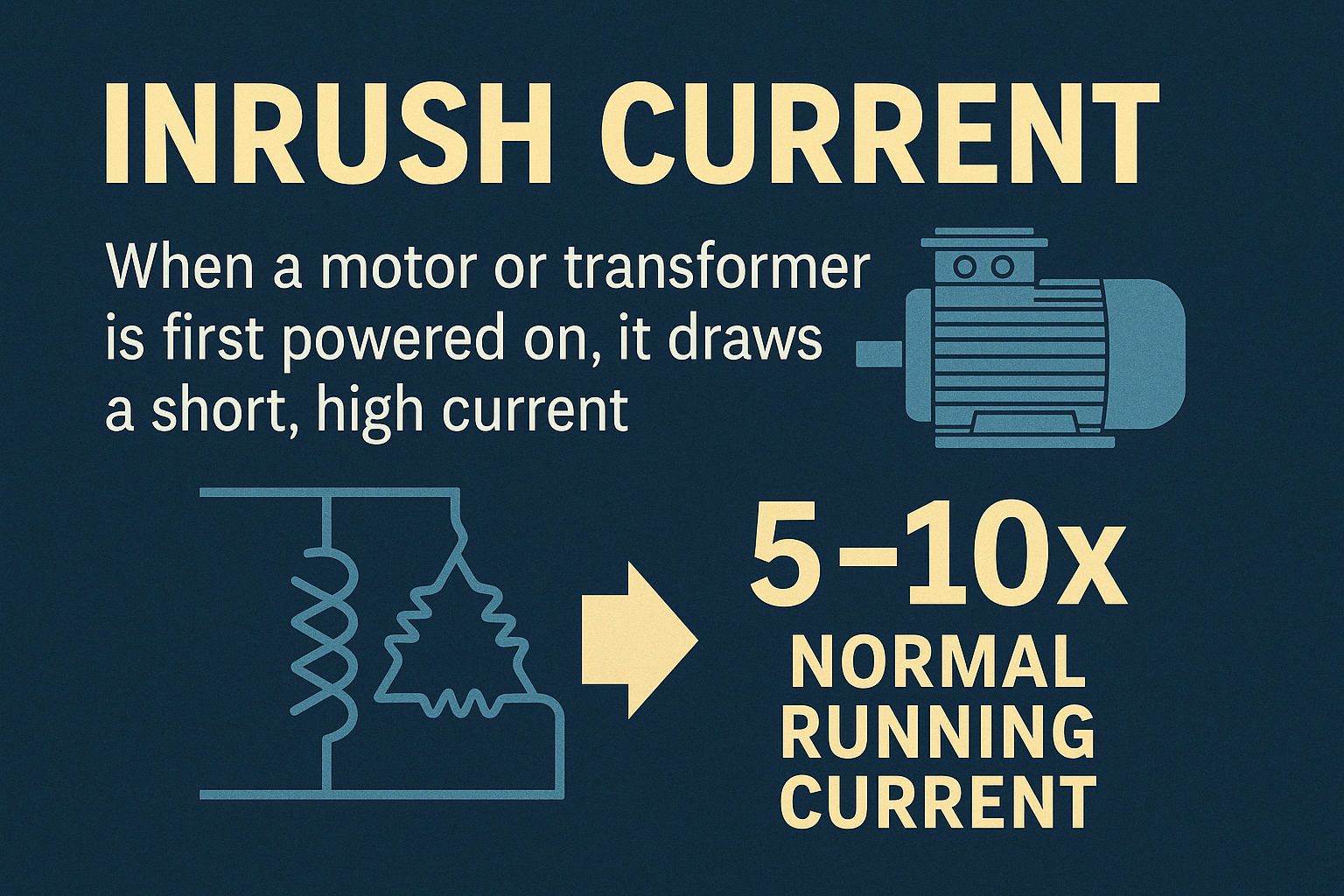
Understanding Inrush Current in Motors and Transformers
Understanding Inrush Current in Motors and Transformers When a motor or transformer first powers on, it draws a short but very high inrush current — often 5 to 10 times higher than its normal running current. This surge isn’t a fault. It happens because the device needs to magnetize its core or accelerate its load…
Read More