
Understanding Inrush Current in Motors and Transformers
Understanding Inrush Current in Motors and Transformers
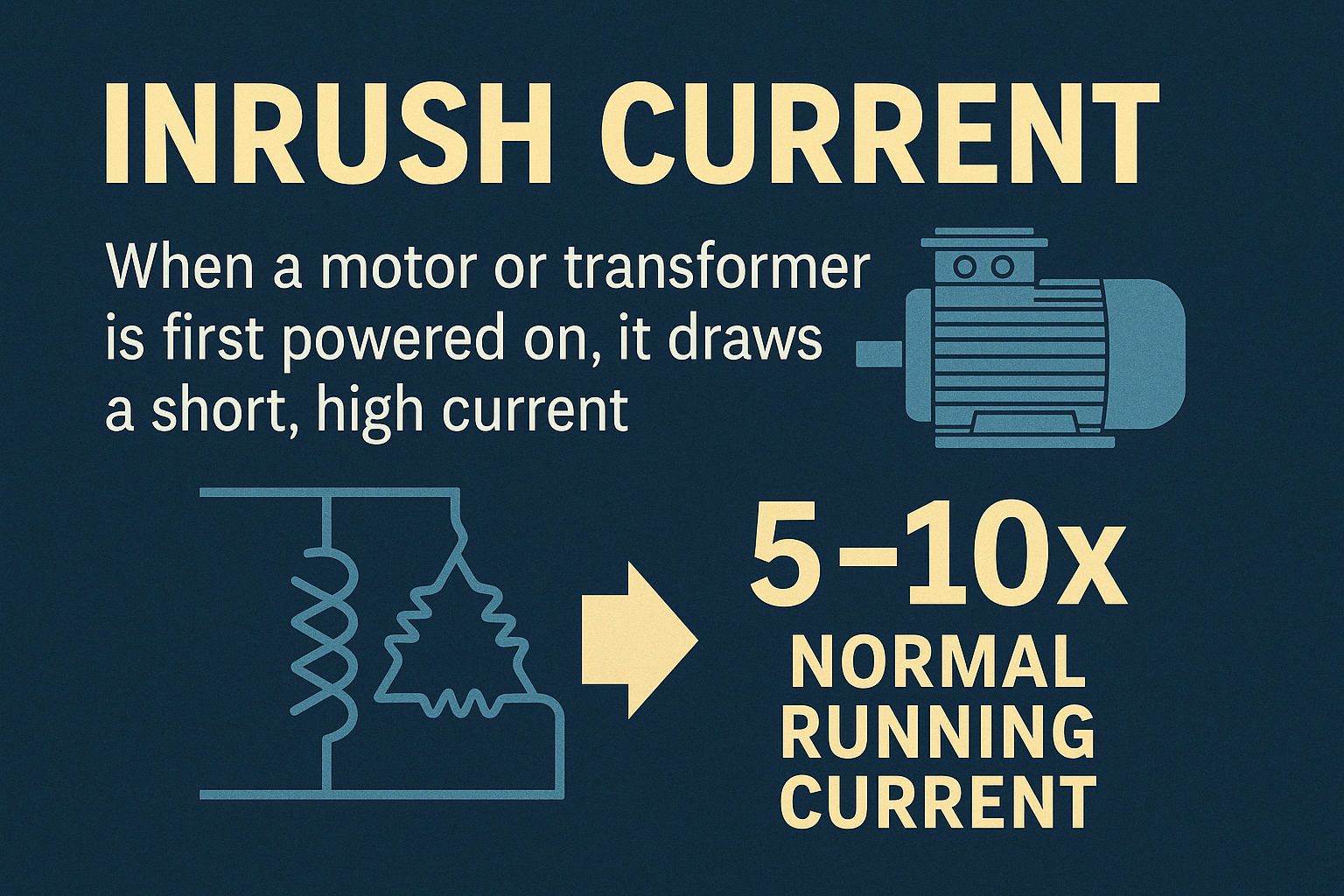
When a motor or transformer first powers on, it draws a short but very high inrush current — often 5 to 10 times higher than its normal running current. This surge isn’t a fault. It happens because the device needs to magnetize its core or accelerate its load during startup.
However, if the electrical protection isn’t sized correctly, inrush current can cause nuisance breaker trips even when everything is operating normally.
Example: Simple Logic to Handle Inrush
IF Motor_Start THEN
    Delay 500 ms   // allow inrush to settle
    Enable_Overload_Monitoring
END_IF
This brief delay prevents overload monitoring from triggering during the initial surge.
Safety & Troubleshooting Tip
If a motor trips instantly at startup, determine what type of trip occurred:
- Instantaneous trip → likely caused by inrush or undersized protection.
- Thermal/overload trip → may indicate mechanical binding, a jammed load, or bearing problems.
Knowing the difference helps you fix the right problem faster.
1-Minute Practice
Choose any motor (real or hypothetical) and do the following:
- Find its FLA (Full Load Amperage) on the nameplate.
- Look up a typical inrush multiple for that motor type (e.g., 6× FLA).
- Multiply FLA × inrush multiple to estimate startup current.
- Use that estimate to determine a breaker size that prevents nuisance trips while still protecting the equipment.